
Open this photo in gallery:
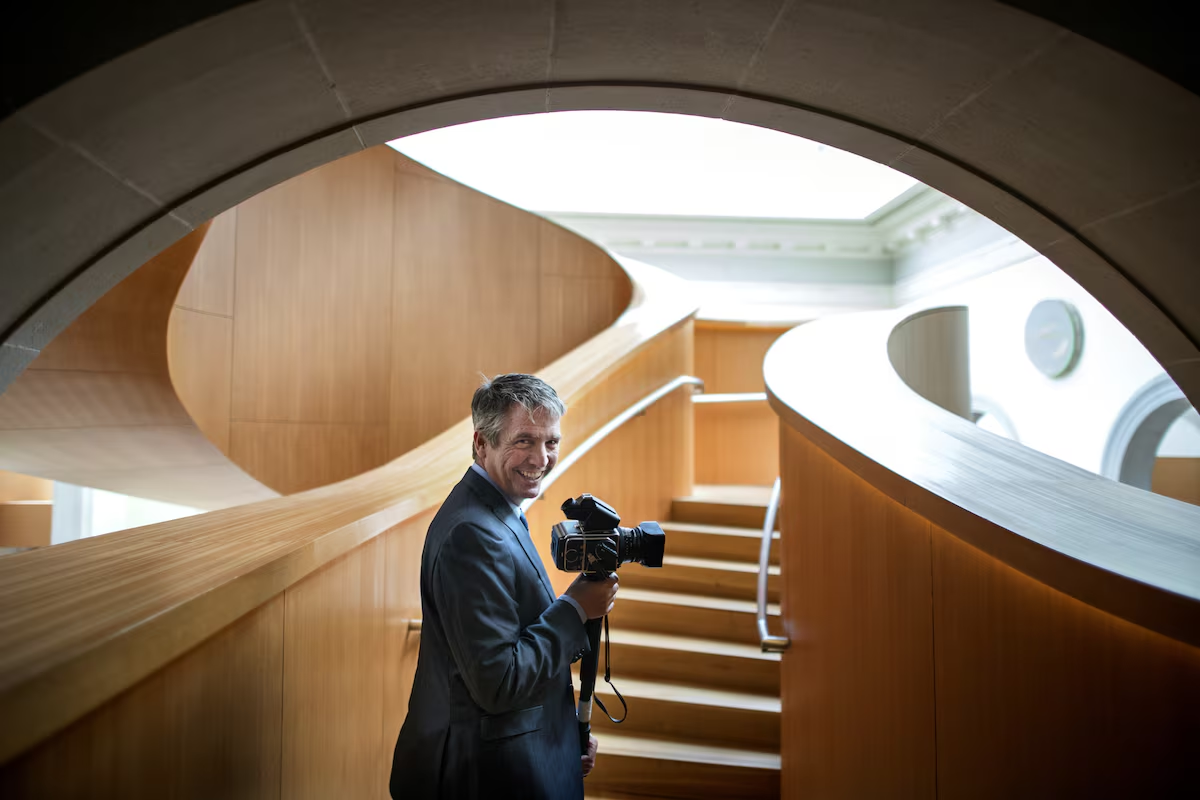
Stephan Jost photographed at the AGO in 2016, the same year he joined the museum.Fred Lum/The Globe and Mail
The Art Gallery of Ontario has announced that director and chief executive Stephan Jost will be stepping down, effective Dec. 31, 2026.
Jost joined the AGO in 2016 after holding roles at the Honolulu Museum of Art in Hawaii, the Shelburne Museum in Vermont and the Mills College Art Museum in California.
Under his leadership, the AGO accessioned more than 18,000 works of art and secured more than $500-million in commitments in gifts of art and funds for the museum. Jost also led a successful campaign to expand the AGO, namely through the Dani Reiss Modern and Contemporary gallery, which will expand the AGO’s gallery space by 40,000 square feet when it opens in 2027.
The Impressionist Revolution at the AGO revisits the movement’s radical roots
“Over the summer, I reflected on arriving at the AGO 10 years ago and establishing the Strategic Plan we call AGO 2028,” Jost said in a press release. “I realized that we have met our goals ahead of schedule. Now is the time to set the AGO up for the future with new leadership.”
In an interview, Jost said he does not have another role lined up, and plans to take “a bit of a break” for three to nine months before seeking a leadership role elsewhere.
“Let me be blunt. There’s no shortage of opportunities for major museum directors,” he said.
The AGO has said they will appoint someone on an interim basis before commencing a global search for a new director and CEO.
Jost’s tenure has not been without controversy. During his time at the AGO, three curatorial staff members stepped down, including chief curator and deputy director Julian Cox, modern and contemporary curator John Zeppetelli, and inaugural curator of Indigenous art Wanda Nanibush.
Earlier this year, the AGO dissolved a committee that declined to acquire a Nan Goldin artwork after a debate over whether the Jewish-American artist’s views are “antisemitic,” prompting four resignations and a governance review at the gallery.
Understanding the politics of art gallery volunteer committees after the AGO’s failed Nan Goldin acquisition
In an e-mail statement at the time, Jost acknowledged that the committee’s purpose had been undermined by discourse that has spilled into the public. “I can assure you we are focused on our mission and working to take the necessary actions to ensure our processes are about art and respectful dialogue,” he said.
Now, Jost said he’s proud of the programming the AGO has done to attract younger and more diverse audiences over the past decade. Fifty two per cent of the gallery’s visitors, not including school groups, are now under the age of 39, and 60 per cent come from “non-European heritage,” he said.
“That’s a shift that we’ve done very intentionally to reflect Toronto,” he said. “… The last 10 years haven’t been without challenges for any cultural leader. But we had a plan and stuck to it, and I feel good about that.”
In a press release, AGO board of trustees co-president Beth Horowitz praised Jost’s programming shifts and initiation of the gallery’s expansion.
Marsha Lederman: The AGO didn’t just embroil itself in controversy over Nan Goldin’s work – it missed out on a magnificent piece of art
“Stephan has transformed the AGO over the past decade. The collection is broader, deeper and more inclusive,” she said. “His leadership of the Dani Reiss Modern and Contemporary Gallery project – fully funded and on track – is his legacy and will have a lasting impact.”
Reflecting on conversations about art and nationalism that have dominated cultural headlines in the wake of the trade war with the United States, Jost said it’s more important than ever for cultural institutions to frame global conversations through Canadian art.
“If we don’t use Canadian content and artists to tell the world what’s important, other places we will.”