
Ontario has hit the popular ticket reseller SeatGeek with $25,000 in fines, believed to be the first penalty applied under its new anti-scalping law.
The law, passed last April, prohibits individuals or businesses from reselling or facilitating the resale of tickets for more than the original total price paid to the primary seller, which includes the base price, fees, service charges and taxes.
Reselling companies, though, say they do not always have access to verified original pricing, making it impossible for them to ensure tickets are listed on their sites without markups.
The province’s Consumer Beware List outlines three administrative penalties that were issued against SeatGeek on Aug. 28: $10,000 for making “a ticket available or facilitating the sale of a ticket [that] exceeded the resale price cap”; $5,000 for failing to disclose the total price of a ticket when purchased from the primary seller; and $10,000 for facilitating a “sale without proof of total price when purchased from primary seller.”
No other information was available on the sale or sales in question.
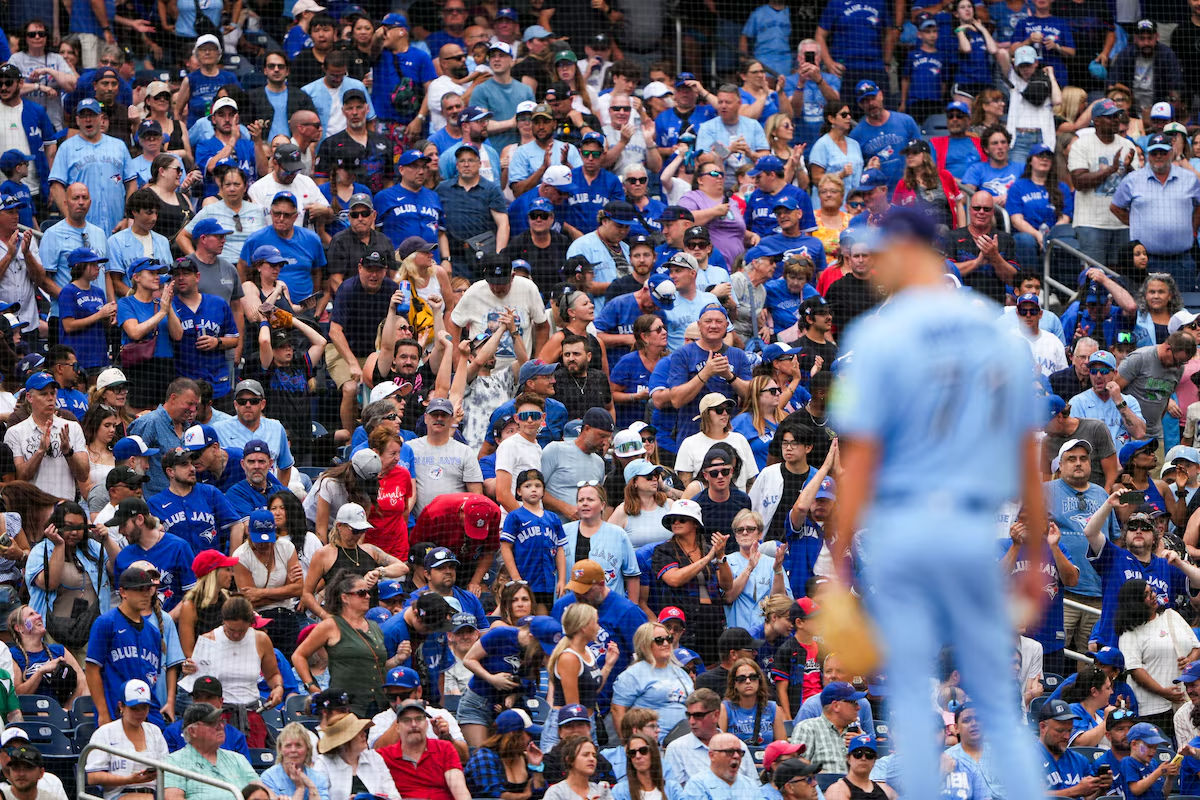
The government amended the Ticket Sales Act, 2017 as part of the April budget, saying it was attempting to ensure Ontario fans would not be gouged by spiralling resale prices such as the eye-watering amounts being charged for last fall’s Toronto Blue Jays playoff run that had angered Premier Doug Ford.
Businesses or individuals are added to the Consumer Beware List if they have been subject to compliance or enforcement actions related to the Consumer Protection Act or other acts of the Ministry of Public and Business Service Delivery and Procurement.
In June, the ministry announced officials had inspected 27 major secondary ticketing platforms for compliance with the new law and that it was “pursuing enforcement actions where appropriate, including issuing some compliance orders to date.”
SeatGeek and StubHub, another popular reseller, were issued notices of proposed compliance in late May, a move that the ministry deemed “advisable for the protection of ticket purchasers.”
Finding the sweet spots in the world of dynamic pricing for concert and game tickets
On Tuesday, StubHub told The Globe and Mail it would not comment on the government’s continuing investigation into the company but said it is facing challenges in adhering to the new law.
“We are upholding our responsibility as best we can despite the law’s silence on some core issues, including how a seller should verify the original price of a ticket,” the company said in an e-mailed statement. “The government has acknowledged this gap and indicated that there is a need for implementation guidance. We will continue to engage in productive conversation to address these matters.”
The Ministry of Public and Business Service Delivery and Procurement did not reply to e-mails seeking comment on StubHub’s statement, a request for an interview with Minister Stephen Crawford or a request for comment on the news about SeatGeek.
StubHub has not been issued any fines to date, making the SeatGeek penalty apparently the first applied under the new law.
In June, the government announced it had increased the maximum administrative penalty to up to $25,000 for repeat offenders from the previous limit of $10,000. It also announced it would allow the ministry to publicly “name and shame” the ticketing businesses against which the ministry had initiated enforcement actions.
It is unclear how effective the province’s enforcement actions have been.
On Tuesday, SeatGeek listed numerous tickets for that evening’s Chris Stapleton concert at Toronto’s Rogers Stadium that appeared to be marked up by more than 100 per cent of the price on Ticketmaster, the original vendor. Seats listed on Ticketmaster in row 20 of floor section C3 topped out at $224.69 (comprising a face value of $179.75 plus a service fee of $44.94), while seats in the same row listed on SeatGeek were asking $469.04 ($409 plus a service fee of $60.04).
SeatGeek did not respond to a request for comment on Tuesday. But in June, Joe Freeman, the company’s vice-president of government affairs, told The Canadian Press that many original sellers, such as season ticket holders for sports teams, don’t have access to the original face value of tickets, which are sold as a package. “This is information that only a primary ticketer like Ticketmaster would have, and Ticketmaster has not been forthcoming with that information,” Mr. Freeman said at the time.