
Open this photo in gallery:
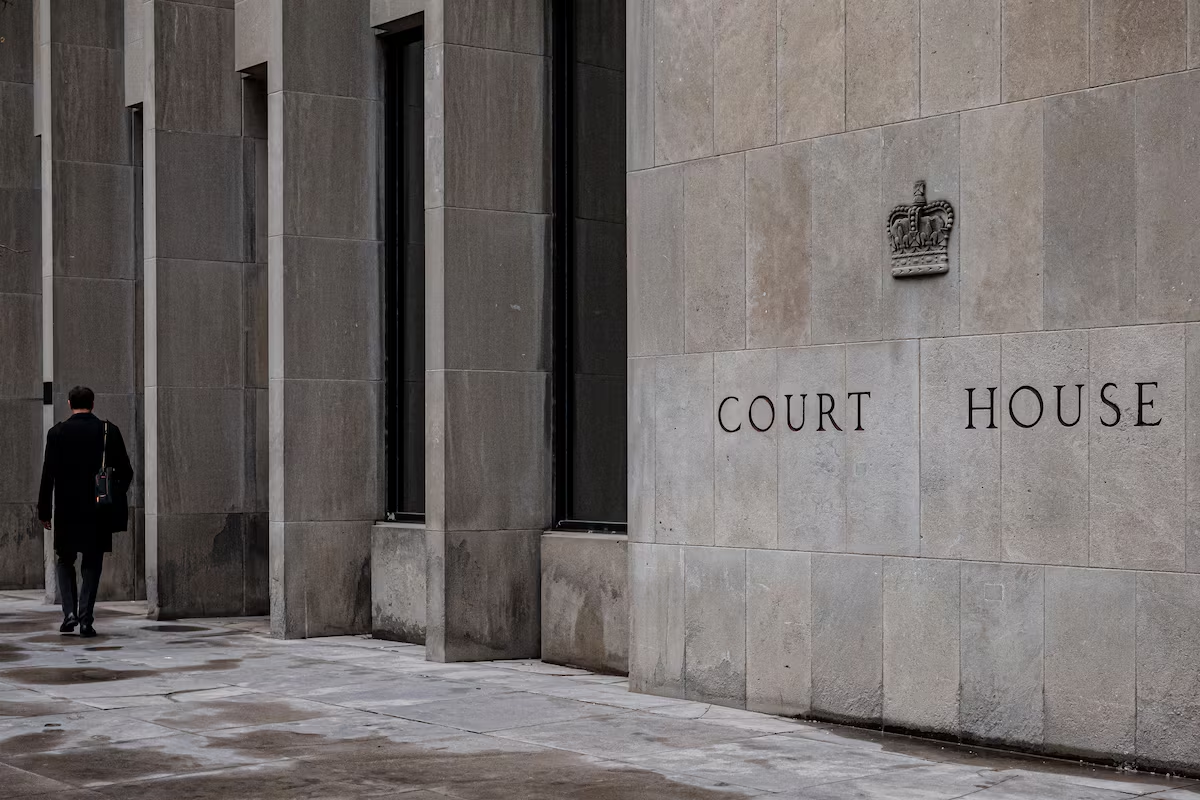
The Ontario Superior Court in Toronto. The Ontario government in mid-August instituted the widespread use of cash bail in the province.Christopher Katsarov/The Canadian Press
The Ontario Superior Court plans to decide next week whether to put the province’s cash bail system on hold while it considers constitutional questions about the new rules.
In a court hearing on Thursday in Toronto, the Canadian Civil Liberties Association and the Criminal Lawyers’ Association challenged Ontario’s cash bail regulations that came into effect last week. They argued that the rules violate the Constitution and the Charter of Rights and Freedoms.
The two groups also asked the court for an injunction, to put a pause on the rules while the court makes a final decision on the main arguments in the case.
After day-long arguments from both sides, Justice William Chalmers of the Ontario Superior Court said he aimed to deliver an answer on a potential injunction by early next week. He said a full ruling on the issues would take more time.
Ottawa calls on provinces to enforce new, stricter bail laws
During the hearing Justice Chalmers expressed skepticism several times about the claims put forth by lawyers for the Ontario government, who argued the provincial rules did not interfere with federal control over how bail laws operate.
“It seems to me that they’re trying to do indirectly what they can’t do directly,” Justice Chalmers said of the Ontario government’s cash bail system. He also pointed to the provincial law’s name, the Keeping Criminals Behind Bars Act.
“The very name of the amending act is to keep people in jail,” Justice Chalmers said.
The legal groups and the Ontario government argued over the extent of federal and provincial powers in the Constitution. Ottawa controls criminal law, starting with the Criminal Code, which includes bail. The provinces have constitutional oversight for “the administration of justice” in their jurisdictions.
The Ontario government in mid-August instituted the widespread use of cash bail in the province. The plan was first announced last November. The federal government in the early 1970s mostly eliminated cash bail in Canada. The Supreme Court of Canada has said judges should impose cash bail only in exceptional circumstances.
If there is a financial component to an accused person’s release on bail ahead of a trial, it is typically a promise to pay.
Ontario’s new rules appear to override that promise to pay if there is financial component in a bail release order. The province’s regulations require actual cash, or a money order or bank draft, to be paid two business days after a person’s release from custody ahead of trial.
Lawyers for the Civil Liberties Association and Criminal Lawyers’ Association said the provincial government’s goal was making bail harder to obtain and that oversteps its constitutional powers.
“You have a [provincial] government who’s telling you loud and clear in unmistakable terms what it’s trying to do: keep more people behind bars,” said lawyer Matthew Gourlay, who represents both legal groups. He called the province’s cash bail system a “blatant intrusion into an exclusive sphere of federal jurisdiction.”
Ontario Premier says he wants to livestream bail hearings
Ontario is the only province that has imposed a cash bail system. Mr. Gourlay said this makes it a “radical outlier” in Canada.
Lawyers for the Ontario government argued that the provincial regulations do not affect how judges or justices of the peace make bail decisions. They further argued the province’s rules do not affect whether an accused person is granted bail. Because of these factors, they argued Ontario’s rules do not overstep the province’s constitutional powers.
“They overstate the impact,” government lawyer Zachary Green said of the challengers to the cash bail rules.
Mr. Green noted that the cash bail regulations do not include the possibility of jailing those who do not abide by the provincial law.
“Nothing in the [Ontario] Bail Act authorizes anyone’s detention,” Mr. Green said.