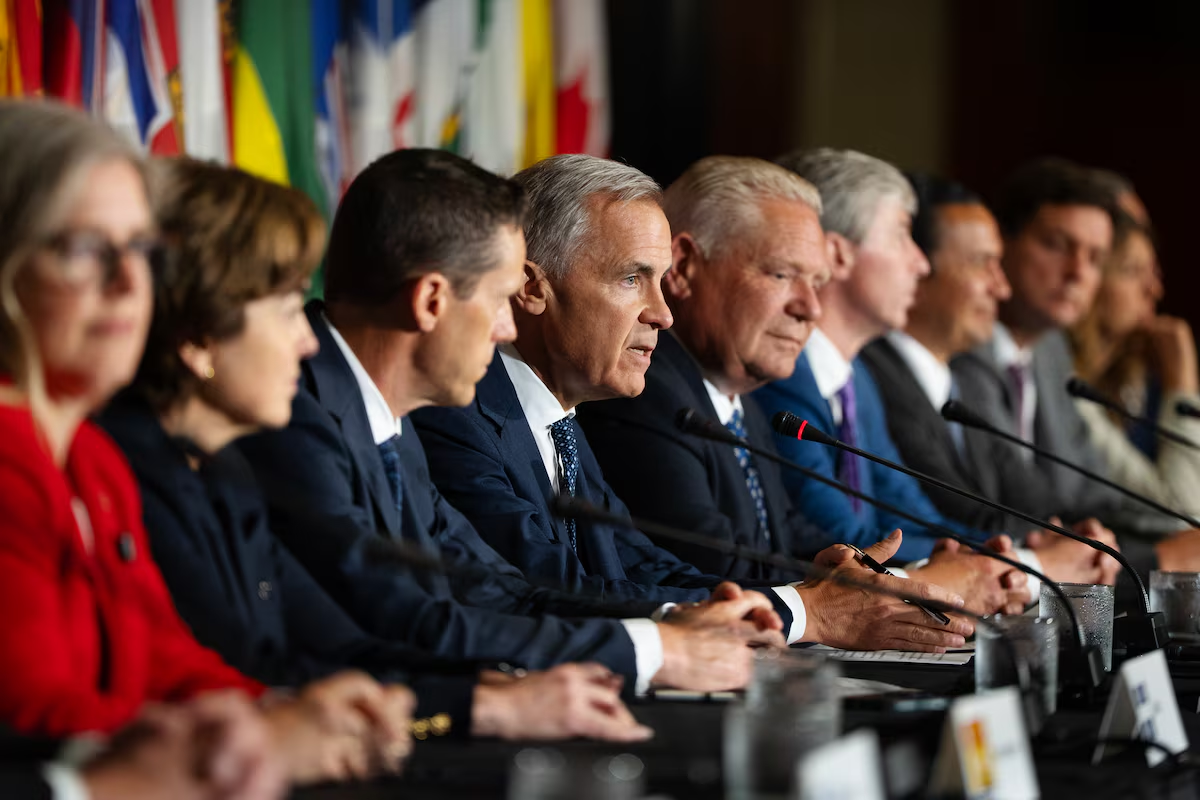

Open this photo in gallery:
Canada’s premiers lined up behind the Prime Minister’s decision to walk away from a trade deal with Washington, but differences quickly surfaced over retaliatory tariffs and how Canada should respond to Donald Trump.Darren Calabrese/The Canadian Press
Canada’s premiers attempted to present a united front behind Prime Minister Mark Carney’s decision to walk away from U.S. trade talks – but some divisions were already emerging among the members of “Team Canada” over what to do next.
An array of premiers, including Ontario’s Doug Ford, B.C.’s David Eby, Manitoba’s Wab Kinew and Saskatchewan’s Scott Moe, came out Saturday to say they backed Mr. Carney both for his move to scupper what they agreed was a bad deal and to push back on the U.S. with retaliatory tariffs. Mr. Kinew called the U.S. tariffs “immoral and unjustified.”
Mr. Ford, who had remained unusually silent since the premiers were first briefed Wednesday on a tentative agreement, told reporters in downtown Toronto after appearing at a Filipino community festival that he supported Mr. Carney’s move to scrap what he called a “terrible deal.”
Canada will retaliate with trade measures on U.S. on Sept. 8, Carney says
While Mr. Carney said on Saturday that last-minute U.S. demands had made the deal unpalatable, Mr. Ford said he told the Prime Minister that he even opposed the tentative deal floated days earlier. Ontario’s Premier said auto and steel industry CEOs and union leaders told him the suggested U.S. tariff reductions were too meagre, and that this was the reason he opposed it.
But Mr. Ford also said U.S. President Donald Trump keeps changing the terms of the deal: “President Trump is the type of person that would steal your lunch money the first day and he’d steal the tuque off your head the second day and the third day he’d steal your running shoes. He is not to be trusted whatsoever.”
The Ontario Premier said he supported the plan to slap “dollar-for-dollar” tariffs on U.S. goods in response to the new American levies, a policy he has long advocated.
He and Mr. Eby both made it clear that U.S. booze would remain off their provincial liquor-store shelves, having remained mum for days on a request from the Prime Minister that came Wednesday for provinces to drop their booze bans as sign of good faith to the Americans.
Quebec Premier Christine Fréchette said federal negotiators were right to walk away from U.S. proposals that would have crossed some of her province’s “red lines,” including removing bilingual labelling regulations and weakening policies that support French culture. She said language issues should not be up for negotiation.
“Our culture, our language, is central to our identity,” she said.
Retaliatory tariffs could be dangerous for both Canada and U.S., trade experts warn
But even in the face of the trade crisis, some differences between premiers, and between provinces and the Prime Minister, were clear.
Alberta Premier Danielle Smith has long expressed reservations about retaliation or any attempt to use her province’s oil and gas resources as bargaining chips. On Saturday, while supporting Mr. Carney’s decision to walk away, she cautioned against retaliatory tariffs but stopped short of demanding that Mr. Carney reject the option.
“I know, emotionally, it feels good to retaliate. I get that. But let’s remember what happens when we retaliate,” Ms. Smith said during her weekly talk-radio appearance, pointing out that many Canadian consumers and businesses – including Alberta farmers – will be paying 50-per-cent tariffs on U.S. products they need.
Mr. Ford, who has in the past called for restricting U.S. access to oil from Alberta or potash from Saskatchewan, was careful only to list Ontario resources as potential bargaining chips on Saturday, mentioning critical minerals, steel and nickel.
Open this photo in gallery:
Ontario Premier Doug Ford says he supports Ottawa’s decision to reject a proposed U.S. trade deal and favours matching new American tariffs ‘dollar-for-dollar.’Arlyn McAdorey/The Canadian Press
Nova Scotia Premier Tim Houston, who expressed support for Mr. Carney’s decision, also sounded cautious about retaliatory tariffs: “ ‘Stick it to them, fight fight fight,’ that feels great in the moment. But we have to live with tomorrow and the next day and the day after. And this will have a massive impact on a number of Canadians and Nova Scotians who probably don’t realize it yet.”
Explainer: What Trump’s new tariffs mean for Canada’s economy
The Premiers met with Mr. Carney via a conference call Saturday afternoon to discuss the retaliatory tariffs and mitigation measures or financial support for affected sectors, the details of which are supposed to be rolled out in the coming days.
On Saturday morning, Mr. Ford’s office released a letter he had sent to Mr. Carney five days earlier that had demanded the federal government soften the tariff blow to the steel and auto industries by quashing environmental regulations, such as the industrial carbon tax and loosening rules for vehicle tailpipe emissions. Before Saturday’s meeting, Mr. Ford said Mr. Carney had not yet agreed, and that “further discussions” were needed.
At a press conference in Vancouver, Mr. Eby said he fully supports Ottawa “standing up to a bully” by walking away from the trade negotiations.
He warned that the collapse of talks will mean economic pain and job losses, but said retaliation was necessary to send a message to Mr. Trump: “A bad deal runs the risk of entrenching a set of tariffs and charges and capitulations that will be very hard to undo in the long term.”
The B.C. Premier said he and other premiers received assurances from the Prime Minister and his Canada-U.S. Trade Minister, Dominic LeBlanc, in their Saturday meeting that Ottawa will help streamline the way federal aid is handed out to tariff-stricken businesses, noting that small companies don’t have the resources to jump through bureaucratic hoops to access relief.