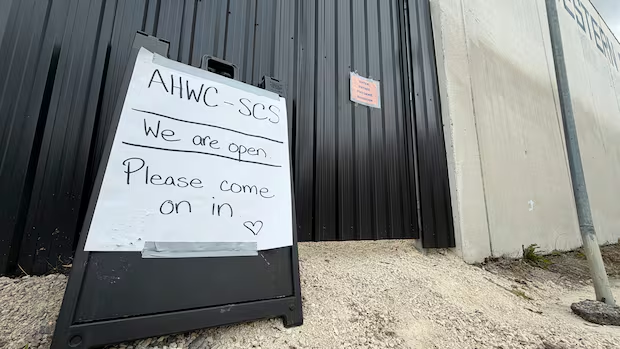
Manitoba’s first supervised consumption site is opening five days a week in Winnipeg after a series of lengthy delays.
The site at 366 Henry Ave. in downtown Winnipeg opened at 11 a.m. Tuesday, after several setbacks derailed the province’s plans to establish a facility allowing drug users to consume under the supervision of trained staff last year.
The province says the site — which will not supply drugs — will reduce the risk of fatal overdoses and other harms while connecting people to resources they need.
“A little emotional for the community that they’re finally going to get the supports and services that they so deserve,” Addictions Minister Bernadette Smith said.
“This is another tool where people can access supports and services, get on to a path to recovery.”
The NDP had initially aimed to open the site in 2025. It first proposed opening it on the Disraeli Freeway, but that location was scrapped in September amid stiff opposition from people in the area.
Neighbours and the Progressive Conservatives have also protested against the new site in a provincially owned industrial building west of Main Street, saying they believe it will make the area less safe.
 Clients at the site for injections will go to an RV previously used for vaccinations during the COVID-19 pandemic. There will be a space under canopy for inhalation. (Gary Solilak/CBC)
Activist and former addict Joseph Fourre said the site only “prolongs the agony of addiction,” and resources could have been better used elsewhere.
“There is no structure in place to get on the pathway of recovery,” Fourre said outside the site Tuesday. “If you just look at the wait times for treatment or detox, it’s just not there.”
Monica Cyr, CEO of the Aboriginal Health & Wellness Centre — which will run the site in partnership with the province and other front-line organizations — asked critics to give it “a chance.”
“Adding more resources at a time of crisis is not a bad thing,” she said.
“We are dedicated to being a good neighbour. We believe in the work that we’re doing. We believe in harm reduction.”
The site will have physician oversight and a 24/7 security service. There will be eight staff on duty, including nurses and a crisis counsellor.
The space can take up to 12 clients at a time. They will undergo an initial assessment, determining, among other things, which drugs they’re using.
Those who are there for injections will go to an RV that was used for vaccinations during the COVID-19 pandemic. There will be a separate place under a canopy for inhalation.
“When it comes to people actually using their substances, that takes about two to three minutes,” Cyr said. “After about 20 to 25 minutes, [they’ll be] carrying on with their day.”
Staff will keep an eye on clients at all times, touching base with them and offering them additional resources before they leave.
Downtown Community Safety Partnership foot patrols are available to accompany people to wherever they need to go, which Cyr suggested will help keep people from congregating around the site.
 Several setbacks derailed the province’s plans to establish the facility, which finally opened at 366 Henry Ave. in downtown Winnipeg. (Gary Solilak/CBC)
Smith said no one under 18 will get access.
A more permanent setup in the future will include a rapid access addiction medicine clinic and primary health-care services.
The Aboriginal Health & Wellness Centre submitted an application to operate the site to Health Canada in December.
Premier Wab Kinew indicated the temporary site would be running in March once the 2025 opening was abandoned, but that timeline was also scrapped. It was operational for one day in June, with a gradual opening in July allowing staff to train before the Aug. 11 full opening.
Mayor Scott Gillingham said Tuesday that he hopes the site drives drug consumption away from city streets.
“I don’t want to see any more use on the streets,” he said at a news conference on downtown safety.
“I know that’s a tall order, but what we need to do is get people that are using off of bus shelters, off of sidewalks. They now have a space to use in the downtown.”
Health Minister Uzoma Asagwara said the opening is about caring for people, but it will also support efforts to make the downtown safer.
 Mayor Scott Gillingham hopes the new facility drives drug consumption away from city streets. (Kevin Nepitabo/CBC)
It’s “about making sure that people have a place they can safely get services, connected to housing, … not die in our streets,” they said.
“This is something that experts and that folks have been calling for for a long time, and it’s going to help our downtown community.”
Lourdes Miranda, owner of the Pampanga Restaurant on Henry Avenue, questioned why the government went ahead with the location when many in the neighbourhood are against it.
Miranda said she fears it will make crime problems in the area worse.
“Why here and make people worry?” she said. “They’re trying to help [people]. Are you helping us? You’re scaring us.”
Cyr said the centre does expect a reduction in open drug use, but it will take some time to gauge the full impact.
One measure of success is whether people in the community trust them enough to use the supervised consumption site, she said.
The fact it’s Indigenous-led is central to building that trust, particularly in a city where Indigenous people are disproportionately affected by substance use. Cyr said Indigenous ceremony, smudging, prayer and song will be woven into the facility’s regular operations.
Della Herrera, a Michif matriarch and former executive director of Aboriginal Health and Wellness, said it’s important Indigenous people see themselves reflected in the facility.
“The one thing that’s really key is that we believe them.”
 Della Herrera says Aboriginal Health and Wellness is ensuring the new supervised consumption site is a safe space for Indigenous people. (Gary Solilak/CBC)
“We believe when they walk in that they want this service, they want this support, they want to be on this healing journey,” she said. “There are relatives, and we need to take care of them.”
The location is the first Indigenous-led supervised consumption site in Canada.
The provincial and federal governments will receive regular reports on the site’s activities, including how many people have gotten supports.
WATCH | Celebration, criticism as supervised consumption site opens:
Opening of supervised consumption site splits Winnipeggers
Winnipeg’s supervised consumption site officially opened Tuesday. Supporters believe it will reduce the risk of fatal overdoses, while critics worry it will ‘prolong the agony of addiction.’