
Open this photo in gallery:
PeopleImages/iStockPhoto / Getty Images
This is the weekly Work Life newsletter. If you are interested in more careers-related content, sign up to receive it in your inbox.
Strength isn’t just about how much weight you can lift or what you see in the mirror. According to Deane Code, a former public relations executive and competitive bodybuilder turned wellness coach, working to get stronger is about sending the right message to your brain.
She learned that lesson during a gruelling pitch for a new healthcare client during her public relations career, when tight deadlines and long hours had the team running on empty.
“People around me were getting sick and falling like flies. They were burned out but I was still standing, and not because I was tougher, but because I trained,” Ms. Code says. “I protected my sleep and kept lifting. I kept my body regulated while everyone white-knuckled it through with caffeine.”
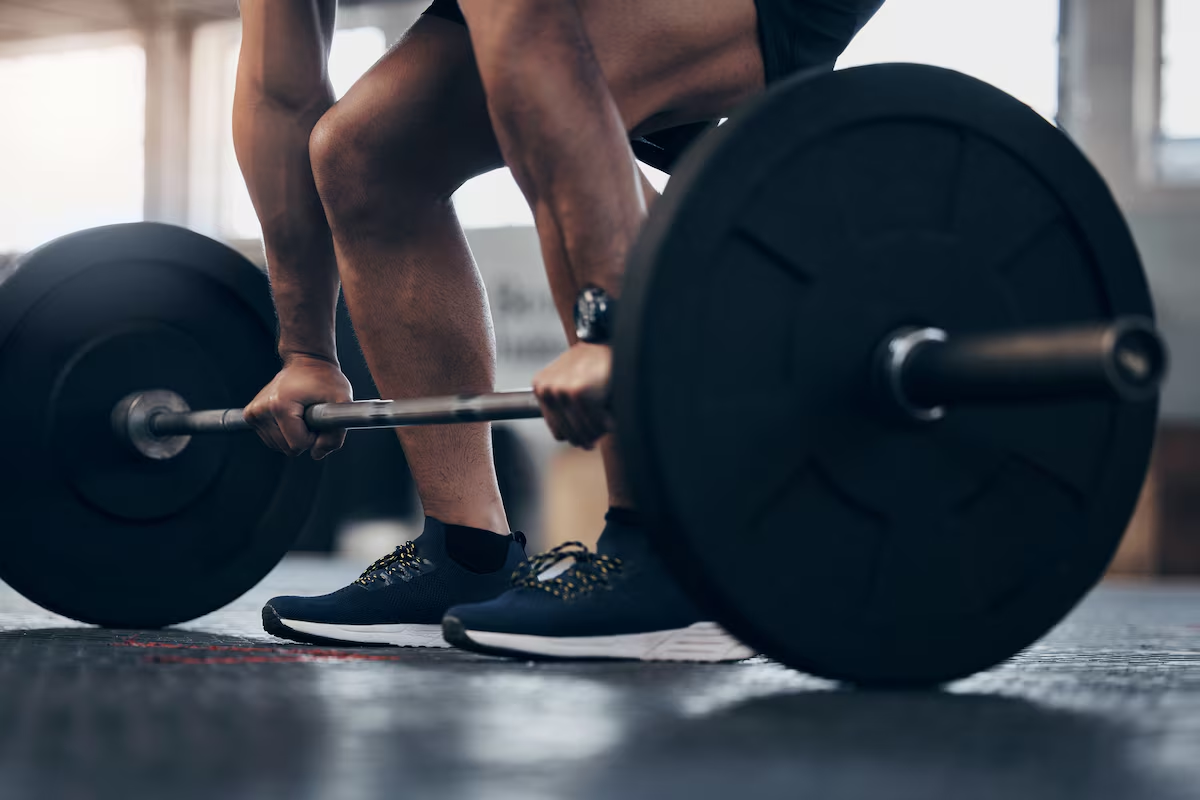
It was that physical resilience and confidence gained through lifting heavy weights that changed the way she responds to pressure at work and in her life. “When you do a hard thing on purpose, especially under load – for example, lifting weight – you prove to your body that you can do hard things everywhere else,” she says.
Today, Ms. Code, who is the founder of Toronto-based GLO-On Wellness Coaching, works with clients to rebuild their strength, confidence and energy, using principles that apply to anyone navigating demanding work. Her coaching framework, which she calls Mind-Body Radiance Alchemy, begins by addressing the nervous system before changing behaviour.
The first step is regulation, which is about identifying the patterns keeping someone stuck, whether that’s chronic stress, poor sleep or constantly operating in survival mode.
“Sleep can be so underrated and undervalued by people, but it’s actually the umbrella for everything else, and if you’re able to manage your sleep and your stress, then your nervous system feels safe and you’re able to perform better,” she says.
Once that foundation is in place, clients move into building strength through consistent daily habits, including regular resistance training. This dedicated time often becomes “anchors” that help her clients navigate the stressful times.
The final step is alignment, which focuses on refining how someone shows up once that stronger foundation exists. That can include replacing negative self-talk with more neutral or positive internal dialogue and becoming more comfortable setting boundaries without shrinking.
By the end of the process, Ms. Code says clients often find the gap between who they really are and the person they’ve become for everyone else begins to shrink. They have more confidence, more energy and a stronger ability to navigate work and life on their own terms.
If Ms. Code could convince every knowledge worker to adopt just one habit, it would be this:
“Lift something heavy three times a week, not for the mirror, but the message it sends your brain,” she says. “You can’t think your way into being capable. You lift your way there, and your belief follows.”
Fast fact
Stress snapshot
40 per cent
That’s how many employees worldwide experience significant stress on a given day, according to analytics and management consulting company Gallup. That is up from 31 per cent in 2009.
Career guidance
Resilience roadmap
According to Nancy Fonseca of Great Place To Work Canada, building workplace resilience rests on the three foundations of trust, communication and purpose.
She says leaders should communicate clearly and consistently, invest in ongoing learning and reskilling and support employee well-being and inclusion by fostering psychological safety and flexible work arrangements. Finally, connect everyday work to a clear sense of purpose, so adaptability becomes a habit rather than just a reaction to crisis.
Quoted
Community connection
“In the grand scheme of things, the act of meeting up with neighbours to walk seems small. Some days though, it feels like an act of resistance. A radical act. A joyful act against so much mad chaos in the world, political and personal. Our revolutionary act is to check in with each other and keep tabs on community happenings. Taking a break and reconnecting with friends is a small action with big consequences. We are fixing our world all while getting our steps in, ” writes Vancouver-based Alexis Palmer-Fluevog.
In this First Person essay for The Globe, she shares how meme-inspired ‘Hot Girl Walks’ with a group of neighbourhood women evolved into a community connected by much more than movement.
Read more
On our radar
Workplace wellness
The way work is organized today could affect more than employee productivity or burnout, according to new research. Economists from American University and the University of Kansas say workplace conditions may also have long-term implications for the health of future generations, suggesting the impact of work extends well beyond employees themselves and into their families.