
Open this photo in gallery:
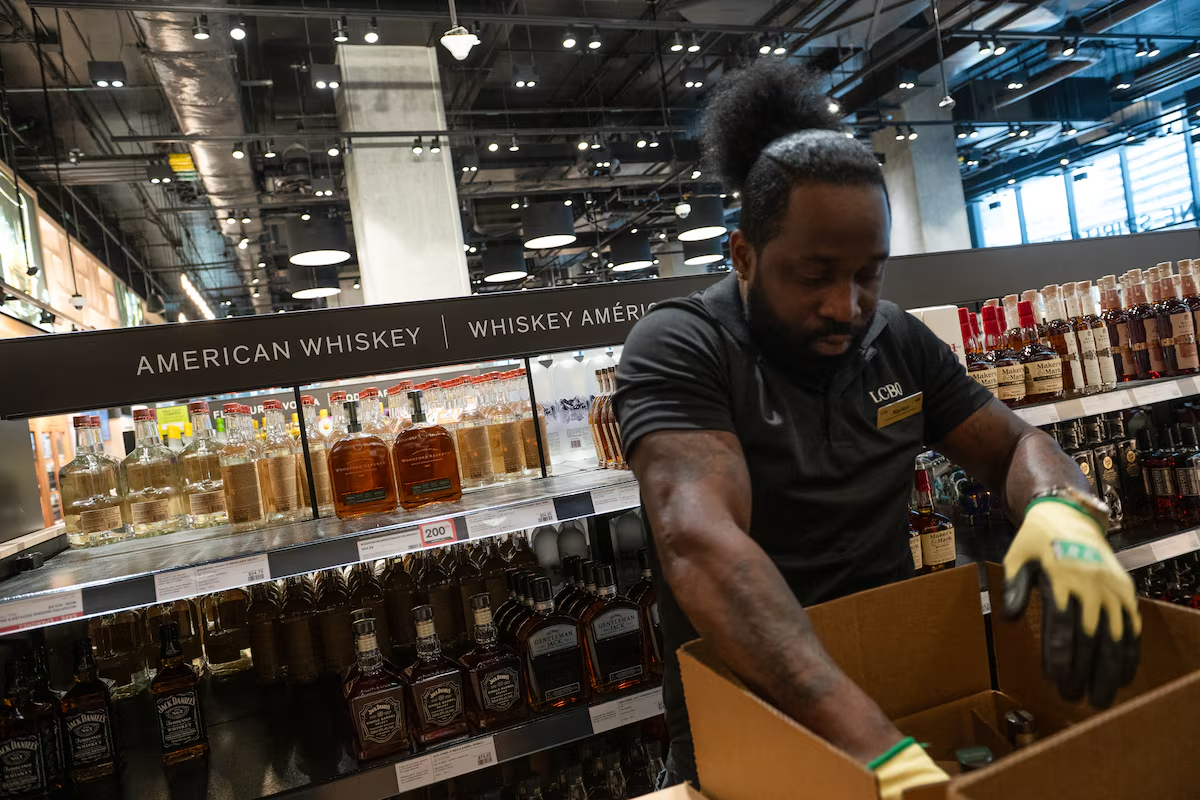
An LCBO employee removes American whiskey from the shelves in Toronto in 2025. U.S. President Donald Trump threated to impose new tariffs on Canadian alcoholic beverages and other products starting on Aug. 19.Laura Proctor/The Canadian Press
The U.S. alcohol industry is understandably fed up with being a pawn in President Donald Trump’s trade war with Canada.
Mr. Trump claims to be defending American interests by threatening to impose new tariffs on Canadian alcoholic beverages and other products starting on Aug. 19.
But many U.S. wine, beer and spirit producers don’t want this kind of help. They are warning him that his latest attempt to strong-arm Ottawa in trade talks will also inflict more damage on them.
Decisions to lift U.S. alcohol bans should be part of broader deal, Carney says
An American industry group, calling itself the Toasts Not Tariffs Coalition, argues that legislators should instead be focused on restoring open markets with Canada and providing certainty for U.S. businesses that rely on cross-border trade.
“The latest announcement underscores a troubling reality: The beverage alcohol and hospitality sectors continue to be caught in the middle of trade conflicts it did not create,” the coalition states in a press release issued in response to the presidential proclamation of the impending tariffs.
The 50-per-cent tariffs will be invoked under Section 338 of the Tariff Act of 1930.
Also known as the Smoot-Hawley Tariff Act, the protectionist trade legislation was intended to give Washington a means to settle the score with countries that unfairly impose tariffs on U.S. products. Instead, Mr. Trump is using it to menace an already-wronged trading partner.
In addition to alcohol, the recently announced U.S. duties will apply to a range of other Canadian exports, including hockey sticks and cement, regardless of their standing under the United States-Mexico-Canada Agreement on trade.
U.S. alcohol producers, however, are already feeling acute pain.
“For more than a year now, American wine and spirits exporters have faced major losses in Canada after U.S. products were removed from retail shelves across the country, cutting off access to one of our most important export markets,” the coalition added in its release.
Open this photo in gallery:
U.S. President Donald Trump speaks during a meeting in the Oval Office of the White House on Monday in Washington.Alex Brandon/The Associated Press
Mr. Trump, though, appears unfazed by the financial pain that his illogical trade policies have inflicted on the U.S. sector.
Even the U.S. industry acknowledges that provincial and territorial boycotts of American alcohol only came to pass because of Mr. Trump’s unprovoked trade war.
It didn’t have to be this way. Before those bans began in March 2025, Canada had been the top export market for U.S. wine and the second-largest destination for U.S. spirits.
But, Canadian imports of U.S. alcoholic beverages plummeted by roughly 81 per cent to US$137-million in the 12 months spanning March 2025 to February 2026, compared to the same period the year before, according to the White House.
The coalition, meanwhile, cites a 78-per-cent drop in U.S. wine exports to Canada from 2024 to 2025, resulting in US$357-million in lost export value from that category alone.
Canada was responsible for more than 80 per cent of total U.S. wine export losses globally, making 2025 “the most catastrophic single-year trade disruption in the history of U.S. wine exports.”
Ouch.
The coalition has spent months cautioning the Trump administration that its protectionist trade policies risk permanent harm to American brands in Canada.
“The significant damage to U.S. alcohol brands in Canada caused by this trade dispute will have lasting negative impacts on U.S. producers,” the coalition wrote in a correspondence to U.S. Trade Representative Jamieson Greer this past April.
How Canadian alcohol producers are adjusting in light of Trump’s threatened tariffs
American producers are rightly worried that an escalating trade war will stunt both the competitiveness and long-term sales of U.S. alcoholic beverages in the Canadian market.
Most provinces, including Ontario, Quebec and British Columbia, are standing firm on their boycotts. Alberta and Saskatchewan, meanwhile, are facing new calls to reinstate their bans in light of the pending Section 338 tariffs.
Additionally, other countries similarly aggrieved by U.S. trade policies, such as Mexico, are eager to find new markets for their alcohol exports.
A wider selection of Mezcal in Ontario? I’m down with that.
The real danger, of course, is that Canadian consumers are learning to live without their favourite U.S. products.
Tipplers are finding numerous alternatives for California wine and Kentucky bourbon that don’t require us to swallow our pride.
As much as Canadians would like to toast American alcohol producers for embracing the spirit of free trade, we can’t.
Indeed, some of us may never go back.