
Good morning. Canada’s trade officials take a road trip down south. More on that below, along with a closer look at Alberta’s recovery centres and a multimillion dollar bitcoin hack.
Open this photo in gallery:
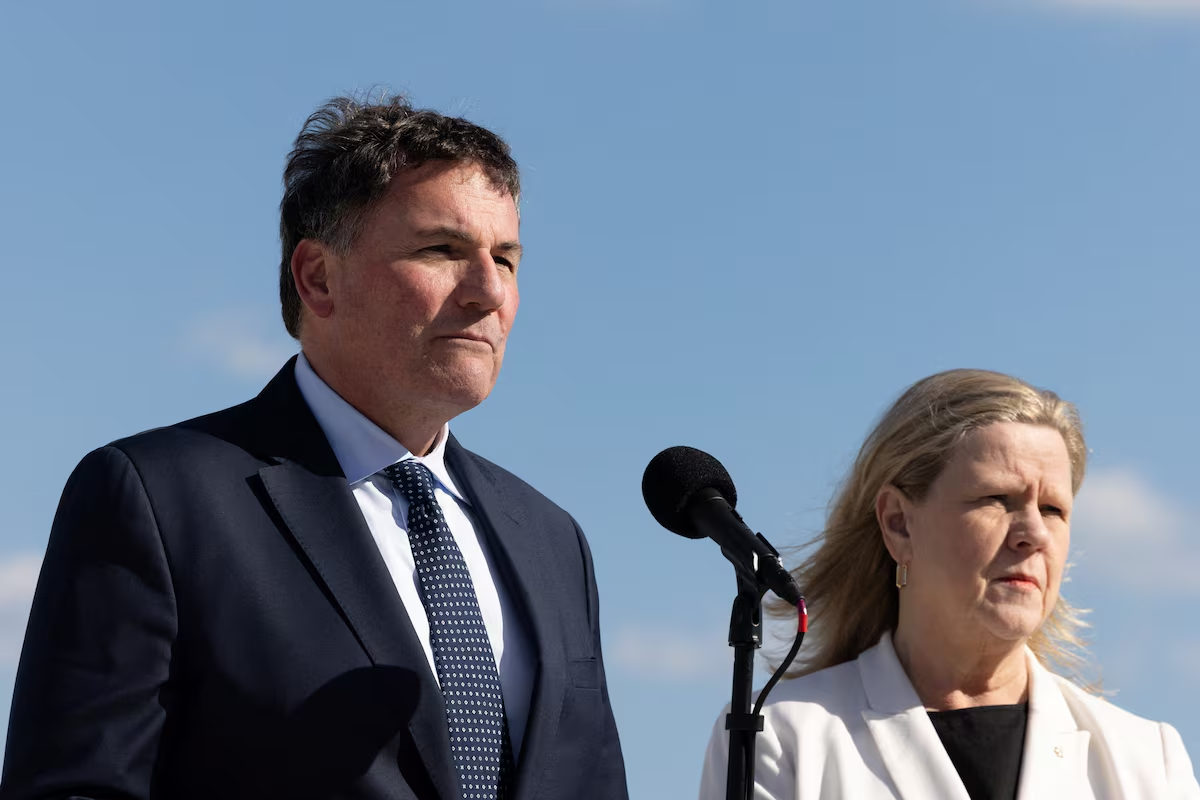
Dominic LeBlanc and Janice Charette at the Embassy of Canada in Washington, D.C., June 2.Anna Rose Layden/Reuters
TOP STORIES
Trade negotiators back in Washington
Intergovernmental Affairs Minister Dominic LeBlanc and chief trade negotiator Janice Charette are back in Washington, where trade negotiators are reviving a proposal that would see Canadian steel and aluminum exports subject to a quota system in return for lower U.S. levies on the metals, as the clock ticks down on President Donald Trump’s next round of tariffs.
The schedule: LeBlanc is set to meet with U.S. industry groups that support the existing Canada-U.S. free-trade deal, as well as with senators, one Canadian official told The Globe and Mail. It was unclear whether LeBlanc would meet with U.S. trade chief Jamieson Greer, Commerce Secretary Howard Lutnick or any other members of the Trump administration.
The context: Trump cranked up the pressure on Canada last month when he announced a new suite of tariffs that would hit US$20-billion worth of exports with 50 per cent levies. The tariffs, which would take effect on Aug. 19, would hit everything from alcohol to dairy products to electronics.
Alberta says recovery centres are on track
Premier Danielle Smith expects construction of three addiction recovery centres in Indigenous communities to wrap up this year without requiring an extra infusion of cash, despite a thicket of liens and lawsuits alleging millions in unpaid bills and misappropriated funds. Alberta earmarked $104-million for the facilities, which are key to the UCP’s strategy of tackling the deadly opioid crisis.
The allegations: In court filings and interviews with The Globe and Mail, subcontractors allege the money has dried up, their work is incomplete, and costs have climbed since they first signed on. The projects are caught in a tangle of legal action, with various parties sparring for control of millions of dollars allegedly earmarked for the facilities.
Multimillion dollar bitcoin hack shakes community
A major vulnerability in a bitcoin hardware wallet has brought renewed scrutiny to the security of investments in cryptocurrency after hackers drained wallets of more than $140-million worth of bitcoin in the last week.
The details: Bitcoin enthusiasts say that the hack took advantage of a software bug used to create master keys for wallets made by Toronto-based Coinkite Inc. Many users have believed that self-custody is the safest way to store the cryptocurrency, but that trust is shaken and has raised doubts over the best way to store their assets.
Open this photo in gallery:
People in Lake Country, B.C., watch as the Quilpituk Creek wildfire burns on the mountainside across Okanagan Lake, near Fintry, on Monday.DARRYL DYCK/The Canadian Press
Powerful winds fan B.C. wildfires
The chief of the Okanagan Indian Band said that the reserve “looked like a war zone” and that hundreds of homes have been destroyed by a raging wildfire near Vernon, B.C. The blaze has been one of the most devastating events in the band’s history, Dan Wilson said.
Elsewhere: U.S. court documents show that a man charged with intentionally setting a wildfire that destroyed hundreds of buildings around Washington state’s second-largest city was questioned by law enforcement during two fire investigations last year, though he wasn’t charged in either.
Open this photo in gallery:
Pediatric radiation masks at a lab inside the Cross Cancer Institute in Edmonton on July 30.Megan Albu/The Globe and Mail
Turning children’s radiation masks into works of art
At an Edmonton cancer clinic, rigid thermoplastic shells are being turned into animated masks, bringing comfort and joy to what can otherwise be a scary experience. Pediatric patients can choose any design they want, from sports teams to fantasy creatures.
The volunteer: Marilyn Kimura, 72, is the volunteer responsible for the transformations. Kimura, whose career was in visual arts before retiring, was inspired to lend her artistic talents after seeing a British newspaper article about a similar program.
The Take
The real danger, of course, is that Canadian consumers are learning to live without their favourite U.S. products.
— Rita Trichur, business columnist
The American alcohol industry rightly fears a nasty hangover from Trump’s trade war with Canada, writes Rita Trichur.
The chart
Asia correspondent James Griffiths explores how scam call centres spread from Southeast Asia to become a global crisis – becoming harder to detect and more profitable than ever.
The Wrap
What else we’re following
At home: Residents across Ontario’s Niagara Region were cleaning up flooded homes and businesses after extreme rainstorms inundated parts of the area and prompted states of emergency.
Abroad: U.S. President Donald Trump said a deal on the Strait of Hormuz could come as early as today or tomorrow, as Iran and Oman inched toward an agreement to reopen the critical waterway and potentially help bring an end to the war.
Arrivals: A Chinese activist has arrived in Canada from Thailand, where police reportedly prevented her boarding a flight to Vancouver in July.
Departures: Health Canada has authorized Moderna to conduct a clinical trial on a new mRNA vaccine for the Ebola species tied to a Congo outbreak that has killed more than 1,700.
Foul: Former FIFA vice president Prince Ali bin Al Hussein said that prize money is being withheld from his Jordan national team as a kind of blackmail.
Fowl: Tourists love Newfoundland’s puffins, but scientists still debate why their beaks look so tropical.