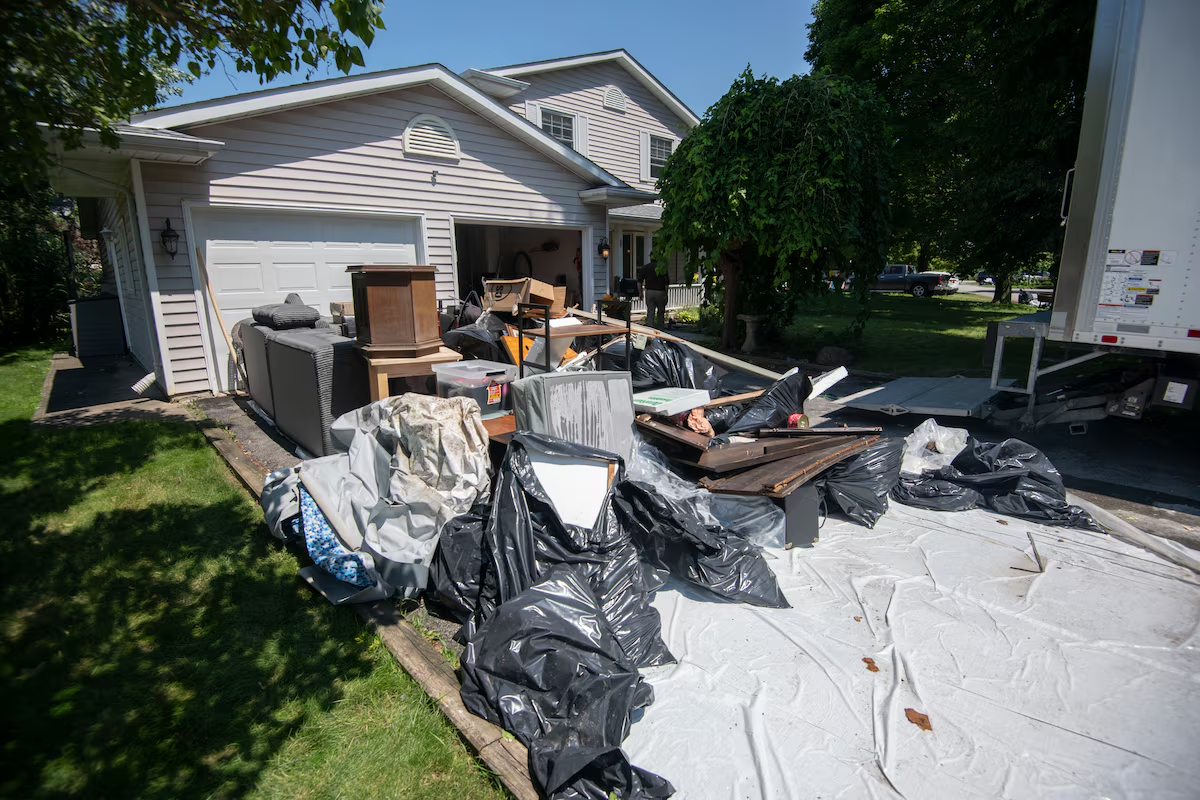

Open this photo in gallery:
Flood damaged items on the driveway of William Hammond’s St. Catharines, Ont., home on Tuesday.Fred Lum/The Globe and Mail
Residents across Ontario’s Niagara Region were cleaning up flooded homes and businesses on Tuesday after a second extreme rainstorm in a week inundated parts of the area and prompted states of emergency in two municipalities.
St. Catharines and the nearby Town of Lincoln both issued declarations Monday after back-to-back storms dumped a combined 250 millimetres of rain on parts of the region. The storms delivered about a quarter of the region’s typical annual precipitation over just three days.
Nathan Morrissette called the last few days “organized chaos.” The St. Catharines resident said his unfinished basement flooded, damaging his water heater and numerous personal items.
“I think we’re all hoping it’s a one-off situation, but I’m definitely afraid. I’ve already tried to make some insurance arrangements,” Morrissette said in an interview Tuesday, calling the storm a “wake-up call.”
“We’ve had neighbours that have been in their homes for over 40 years, people that I know across the city and have never experienced water in their basement and all of a sudden in the last five days: twice,” he said.
States of emergency have been declared in St. Catharines and Lincoln, Ont., after two storms dumped more than 140 millimetres of rain. The heavy rain also hit Niagara Falls, Ont., where mayor Jim Diodati’s own basement flooded.
The Canadian Press
The first bout of extreme rainfall came on July 27 and 28, when over 125 millimetres fell on parts of the region. Another 130 millimetres of rain pounded the area on Sunday. Scientists say climate change, driven the by the burning of fossil fuels, is increasing the intensity of extreme rainfall events, raising the risk of major flooding.
Officials in St. Catharines say the “historic storms” have overwhelmed the city’s roads and sewers, flooded homes and businesses, and eroded parts of its shoreline. The risk of further impacts if another storm were to hit remains elevated, the city said in a news release.
St. Catharines Mayor Mat Siscoe said the emergency declaration underscored the need for additional support.
In a video posted to social media, Siscoe waded through his own flooded basement while he appealed for “some form of disaster relief” from the province and federal government. He said thousands of homes had been hit by flooding.
“The city has been left to fend for itself,” he said in the video posted late Sunday. “No infrastructure can handle a hurricane’s worth of rain on Tuesday and then again on Sunday.”
A spokesperson for Ontario’s Minister of Emergency Preparedness and Response said the province would continue to work with municipal partners to support flood-impacted residents.
“We are actively deploying Ontario Corps partners to coordinate the delivery of cleaning kits and have also made air purifiers available upon request to help dry out basements,” spokesperson Julia Facca said in a statement.
Facca said the province was “assessing the situation” against its eligibility requirements for its disaster recovery program.
Similar issues were reported in Lincoln where officials say flooding was exacerbated by widespread power outages. The town of around 26,000 people said it had fielded almost 300 flooding phone calls in a 24-hour period after Sunday’s storm.
“Our community has faced an extraordinary challenge,” Mayor Sandra Easton said in a statement. “We have witnessed the devastating impacts of flooding on families, businesses, farms, and critical infrastructure.”
Lisa Lautenbach, general manager at The Watering Can, a plant store between Lincoln and St. Catharines, said the business was up and running again Tuesday, despite losing many plants from flood damage.
She said staff and volunteers worked through the night to clear out the water.
“Without the community we wouldn’t have been able to open our doors today. So we’re very, very grateful,” Lautenbach said in an interview Tuesday.
In response to the recent flooding in the Niagara Region, the province is working closely with impacted municipalities to provide support and assist with flood recovery.
I want to thank all of the first responders and staff at all levels of government who have been working… pic.twitter.com/69GIbyfWDZ
— Doug Ford (@fordnation) August 3, 2026
Lautenbach said that after a storm last year caused some flooding, the business invested in swales and a better catchment system to prevent a repeat – but it “did nothing” against this storm.
“This business has been here for 32 years and (this) has never happened until this. This one was nuts, this one was crazy,” she said.
Officials said that even as weather conditions return to normal, the state of emergency ensures they have every available tool to support the recovery.
Morrissette, the flood-afflicted St. Catharines resident, said the storms had also brought out the best in the city’s neighbourly spirit. He commended the city’s curbside garbage pickup to help get rid of damaged items.
“The way the community came together and kind of helped each other out, offering pumps and hoses and labour and just assistance to get things sorted have been a real eye-opener and been amazing to see,” he said.