
Listen to this article
Estimated 4 minutes
The audio version of this article is generated by AI-based technology. Mispronunciations can occur. We are working with our partners to continually review and improve the results.
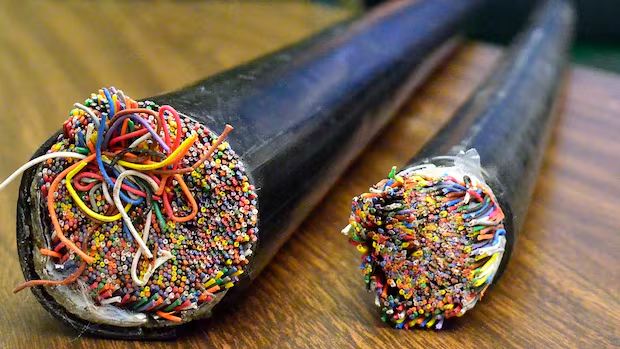
Bell says it has seen a surge in copper wire thefts across its telecommunications infrastructure in 2026, which can disrupt phone and internet services.
The telecommunications company says it has recorded 993 incidents of copper theft and vandalism between January and June — a 78 per cent increase compared to the same time frame last year.
The bulk of the thefts took place in Ontario and New Brunswick, according to Bell, with thefts in those provinces accounting for about 85 per cent of the increased thefts.
Hamilton, Niagara and Milton had the most thefts in Ontario. But in New Brunswick, Bell says the problem was growing fastest, with a 235 per cent increase in thefts from 2025.
Thieves usually harvest copper wire from telephone and telecommunication poles, according to Bell’s director of national network operations, David Joice. But they do it at night or in rural areas where there are fewer eyes to spot it.
They target copper because the recycled metal sells for a good price. It’s become more valuable as the world becomes more electrified — the buildout of data centres and making of electric cars for example have helped up demand.
 A worker walks among copper coils at the Nexans copper production facility, April 12, 2024, in Montreal. (Ryan Remiorz/The Canadian Press)
Gary Dvorkin, owner and founder of Peel Scrap Metal in Oakville, Ont., says the mining of new copper hasn’t kept up with demand, either, which has kept prices for the metal elevated.
He says his business processes eight to 10 truckloads of copper every month — a number that’s increased steadily over the years.
“When prices are up, you get a little more copper coming in,” Dvorkin said. “If you bring in 100 pounds and you get 700 or 800 dollars, that’s a lot of money for most people.”
But Bell says the value of the metal is “minimal compared to the harm caused.”
Wire thefts can cause service outages that disrupt phone, internet and TV service. That means access to emergency services could be cut off, posing a potential public safety risk.
“No single organization can stop copper theft alone,” said Mark McDonald, executive vice-president and chief technology officer at Bell, in a press release.
WATCH | N.B. copper theft leads to 3 arrests, leaves community without Bell service for weeks:
Copper theft leads to 3 arrests in southern N.B. community
Three people have been arrested for alleged copper theft that cut Bell’s network in the Welsford area north of Saint John. The outage began in early January, and crews are working to restore service.
“It will take co-ordinated action from telecommunications providers, governments, law enforcement, recyclers and communities to hold criminals accountable and protect the networks Canadians depend on.”
Dvorkin says he does his best to keep an eye out for potentially stolen copper and calls the police when he comes across suspicious products. But if a thief tries to disguise the metal by cutting it into pieces, for example, he says there’s not much he could do to identify it as stolen.
Bell says it has taken action to prevent thefts, including rigging alarm systems connected to law enforcement, increasing surveillance on the ground and taking legal action against alleged thieves. The company is also in the process of transitioning from copper wire to fibre-optic cables.
Arrests have risen by 32 per cent in the first half of the year as well, according to Bell, which it says reflects “ongoing enforcement efforts.”
In its justice reform bill, which came into force earlier this month, the federal government gave judges the ability to consider aggravating factors, like damage to infrastructure, when sentencing people — which would include copper theft.