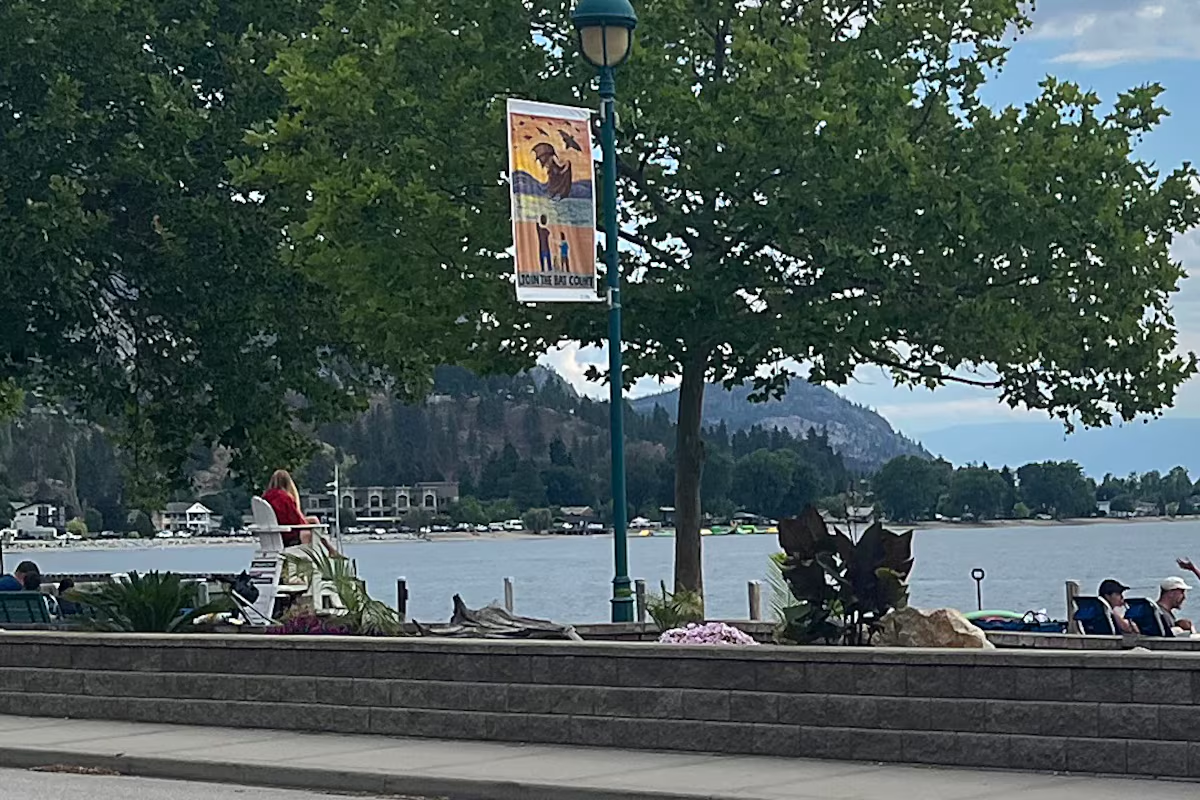

Open this photo in gallery:
Peachland’s Swim Bay is the only lifeguarded beach on Okanagan Lake.Jeff McDonald, Local Journalism Initiative Reporter/The Canadian Press
The numbers aren’t pretty.
Drowning deaths in B.C. have spiked in 2026, with the B.C. Coroner’s Service reporting 40 deaths from May 1 to July 16. In contrast, last year 26 people drowned in B.C. waterways over the same time period.
Five of this year’s 40 deaths have happened on Okanagan Lake, which has to be considered B.C.’s deadliest. Figures from the coroner also show that from 2015 to 2025, the lake saw 33 drowning deaths, far ahead of the next highest lake, which had 12.
Okanagan Lake is a summer fun destination for thousands of people, with all kinds of aquatic activities happening on and in its waters, so perhaps it’s not surprising it sees more such tragedies than other lakes.
There isn’t a single reason for the increase in drownings, said Leana Grace, executive director of the Lifesaving Society B.C. & Yukon, but there’s a common thread: so many people don’t wear life jackets.
“There is no one specific trend. We’ve seen swimming deaths, boating deaths, in a variety of situations. When boating, our top tip for all British Columbians is wear your life jacket regardless of your age or ability,” said Ms. Grace. “There have been instances where we had tragedies strike, with a charter boat where people were not wearing life jackets. We’ve seen situations where paddle boarders have slipped into the water not wearing a life jacket and unfortunately died as a result.”
Alcohol and substance use is a factor in more than 40 per cent of boating-related fatalities, said Ms. Grace, and she urges people to stay sober on the water. “Whether you’re boating or swimming, alcohol and substance use can cloud your judgment, impair your movement, and you want to make sure that you’re alert when you’re on the water, or if you’re watching your children and supervising them while they’re in the water,” she said.
Ms. Grace said all levels of government could do more to reduce the number of drownings, including making wearing a life jacket a requirement for adults during water activities. At present, there needs to be life jackets on board for each adult but they don’t need to wear them. “I can’t stress enough how that one simple step could make a real difference in reducing the number of drownings,” she said.
The District of Peachland offers swimming lessons at Swim Bay, the only lifeguarded beach on Okanagan Lake, and Ms. Grace applauded this because swimming in a lake is a lot different from the controlled environment of a swimming pool. “I love that Peachland is offering swim lessons on the lake in a natural body of water. We know that many people recreate in those natural bodies of water, so for people to feel more comfortable to gain those essential life skills in the location where they will be recreating is absolutely fantastic,” she said. “With the exception of Peachland, generally there are no lifeguards. There are many weather and water conditions that you have to consider and people often underestimate these. You think you’re in a shallow area, and all of a sudden it’s much deeper than you think.”
Peachland is ahead of other municipalities on the lake by providing lifeguarding services, and Ms. Grace said the Lifesaving Society would like to see more lifeguard- supervised areas on the lake because less than one per cent of drownings in British Columbia occur in lifeguard-supervised areas. “This would be a major step that municipalities can take to keep their communities safe,” she said.
Swim Bay has been lifeguarded since 1956. This year the summer season goes to Aug. 28, supervised by lifeguards every day from 10 a.m. to 5:30 p.m. It’s a busy beach, and lifeguards see 200 to 400 people per day, said Sydney Clement, senior manager of community services at the District of Peachland. She said the district documents but doesn’t share information on what type of or how many incidents lifeguards respond to. “Our focus is on maintaining a safe environment through prevention, education, active supervision, and quick response when assistance is needed,” she said. “Our certified lifeguards are on duty to help ensure everyone can enjoy Swim Bay safely and that residents and visitors return home safely at the end of the day.”
Swimmers can borrow a life jacket for free for an extra level of safety, she said.
The City of Kelowna offered a different take on safety on the city’s beaches. They’re not staffed with lifeguards and people need to be responsible for their own safety in the water, said the city’s park services manager Blair Stewart. “Open water environments present inherent risks, and personal responsibility remains an important component of water safety,” he said. “We encourage residents and visitors to be aware of changing water conditions, wear a properly fitted personal flotation device when appropriate, and ensure children remain within arm’s reach when in or around the water.”
Mr. Stewart did not share information about how many people use Kelowna’s beaches each year or whether the city is considering adding lifeguarding services in the future. He said he could not speak to the drowning incidents that have occurred on Okanagan Lake, but “it is our understanding that these incidents have not occurred within designated swimming areas.”
The City of Penticton also said people are responsible for their safety in the water on the city’s beaches, said senior manager of communications and engagement Anna Melnick. “While local governments play an important role in promoting water safety, individuals are ultimately responsible for their own safety and the safety of those in their care when using beaches and waterways. Conditions on lakes can change quickly, and people should always exercise caution,” said Ms. Melnick.
Decisions about whether to provide lifeguard services at public beaches are made by council as part of the city’s service-level planning process, she said.