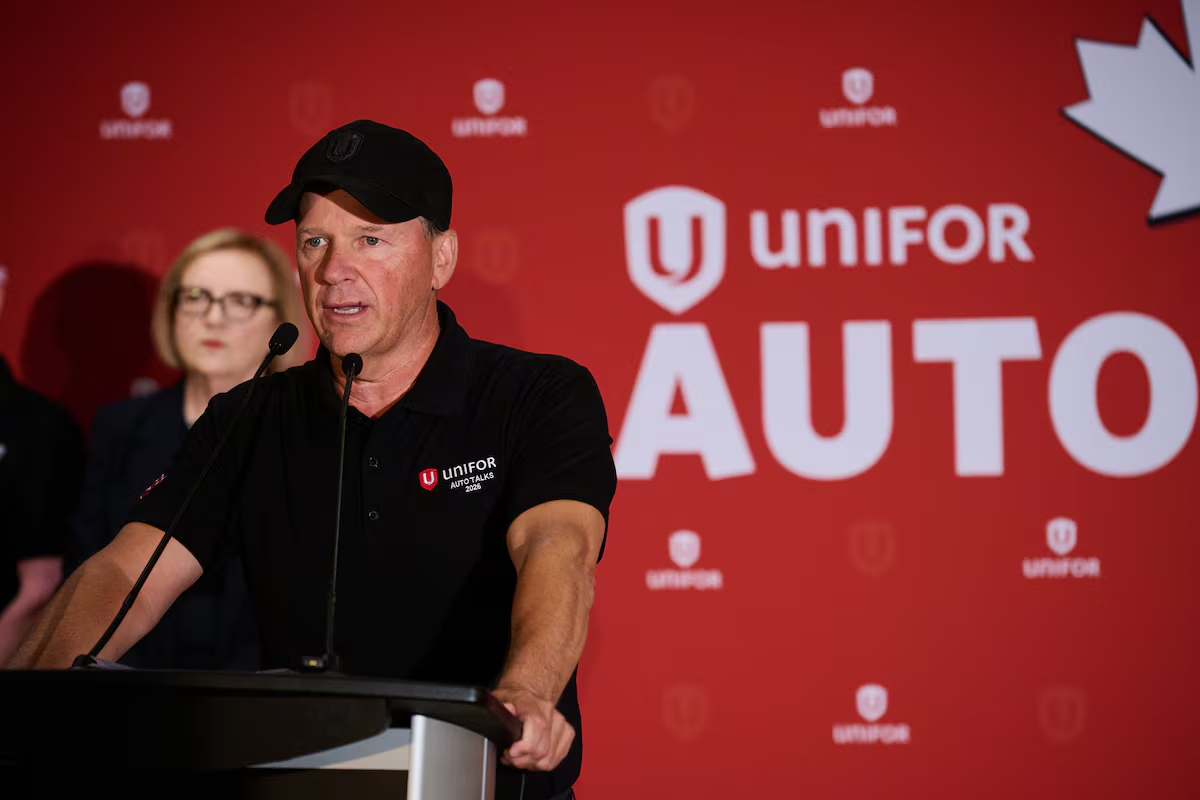

Open this photo in gallery:
Unifor Ford Master Bargaining Chairperson John D’Agnolo speaks to media after the opening of bargaining between Unifor and Ford Motor Co., in Toronto, on June 22.Sammy Kogan/The Canadian Press
Ford Motor Co. workers have ratified a three-year collective agreement that brings 3-per-cent raises in each year of the contract as well as better job and income security amid questions about the future of Canada’s auto sector.
Unifor, which represents 5,150 Ford workers in Canada, said on Sunday the agreement was approved by 74 per cent of the hourly workers while salaried employees voted almost unanimously in favour.
“Negotiating during a crisis is never easy, but our driving goal was to make a wide range of improvements for all of our members building on the gains made in 2023,” said Unifor national president Lana Payne in a press release.
The tentative agreement covers hourly workers at Ford’s Oakville assembly plant, engine factories in Windsor and Essex, and parts warehouses in Ontario and Alberta.
Unifor said Ford has committed to investing US$500-million at the Essex engine factory and US$400-million at the Windsor pick-up assembly plant. Unifor expects an additional shift will be added at the Essex plant by 2029, based on forecast demand.
Ford said the agreement reinforces its 122-year commitment to Canada.
“This agreement is about investing in our people and Canada’s future,” said Jim Farley, chief executive officer of Ford. “With this agreement and our continued investments in Oakville, Windsor and Essex, we’re building on more than a century of manufacturing leadership in Canada and strengthening Ford’s ability to compete and win for years to come.”
Employees will receive $12,000 bonuses, and renewed cost-of-living allowances. The base wage for production workers rises to about $50 an hour by year three of the deal. Workers in the skilled trades will make a base wage of almost $63.
The two sides also agreed on a plan to bring back laid-off Oakville workers by July, 2027.
Mexico not looking to cut separate deal with U.S. and leave Canada out, top diplomat says
Unifor and the automaker reached the tentative agreement on July 11 after three weeks of bargaining against a backdrop of tariffs and uncertainty over the future of the U.S.-Mexico-Canada free trade agreement.
Unifor will now try to apply the Ford gains in the next round of bargaining with Stellantis NV or General Motors. The union has yet to name the next negotiating target.
U.S. President Donald Trump has applied 25-per-cent tariffs on the non-U.S. content of Canadian-made cars, including the trucks from Oakville. Additionally, the U.S. declined to renew the continental free trade agreement that allowed goods to cross the border tariff-free.
The agreement will be reviewed annually, and the U.S. has begun bilateral talks with Mexico.
Ford workers approved the previous contract with just 54 per cent support. The stronger vote today shows “fear of job loss and production moving south now weighs more heavily in workers’ calculations than dissatisfaction with wages and benefits,” said Larry Savage, a labour studies professor at Brock University.
“Autoworkers at Ford didn’t embrace the agreement so much as they made a strategic calculation” to lock in some stability in an uncertain environment, he said.
“In other words, I think most workers voted yes because they believe the union secured what it could in the current climate, while the minority voted no to signal that even in a trade war, there are limits to what they’re prepared to concede,” Prof. Savage said.