
Open this photo in gallery:
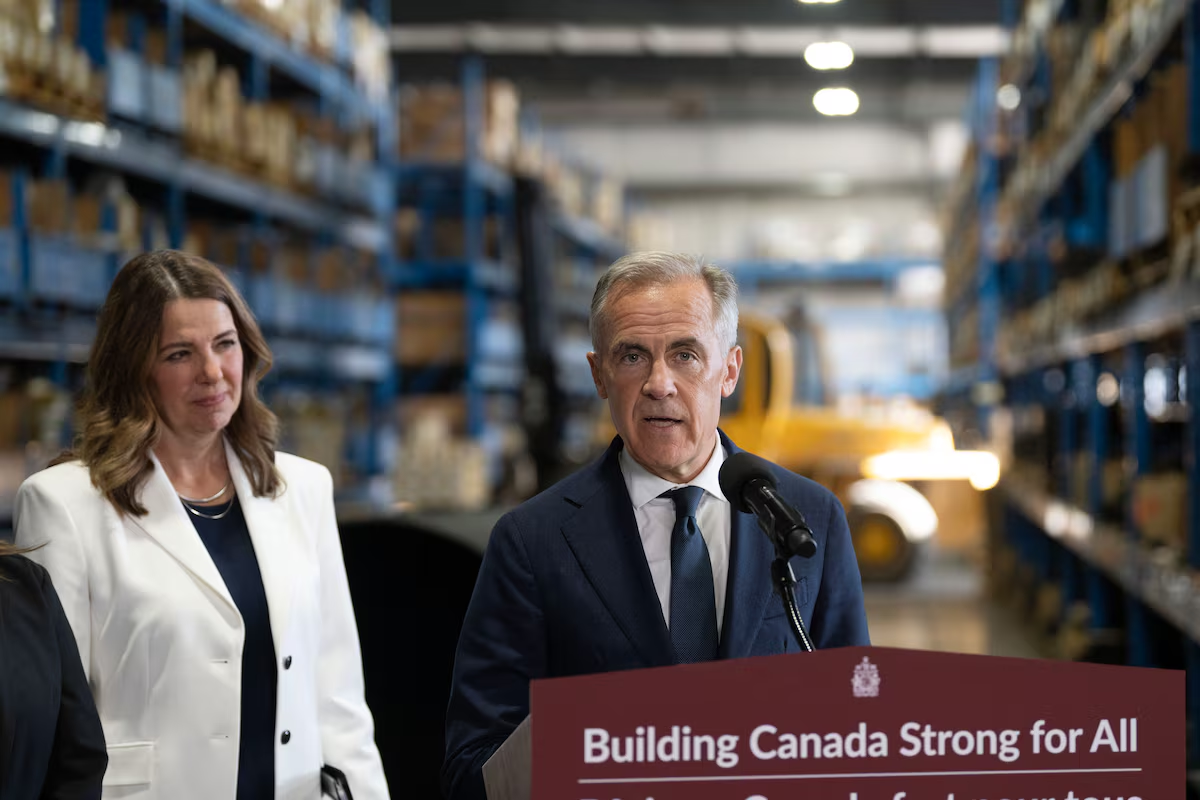
Prime Minister Mark Carney and Alberta Premier Danielle Smith announce plans for a West Coast pipeline in Calgary on July 2.Todd Korol/The Canadian Press
Alberta, Ottawa and Canada’s five largest oil sands companies have signed an agreement to push forward a massive carbon capture project in the province’s north, while setting the stage for a substantial increase in crude production.
The agreement stems from a memorandum of understanding signed by the provincial and federal governments in November, which tied a new oil pipeline from Alberta to the West Coast to lowering emissions through the carbon capture project, called Pathways.
Under the new tripartite agreement – signed July 2 but made public Monday – the governments and companies signalled their support for the development of financial and regulatory frameworks that would “enable sustained and substantial oil sands development and production growth.”
The companies that signed the agreement are Suncor SU-T, Cenovus CVE-T, ConocoPhillips COP-N, Canadian Natural Resources CNQ-N and Imperial IMO-T. Collectively, they make up the Oil Sands Alliance.
West Coast oil pipeline has yet to secure private-sector backing, Carney confirms
The Pathways project will be built in stages, but is expected to be in service on or before Jan. 1, 2035. The agreement notes that both Canada and Alberta will “maintain appropriate fiscal supports” to achieve 10 megatons of emissions reductions in the oil sands by 2045.
Under the agreement, the federal government said it would update its clean fuel regulations and offer financing support for the operating costs of carbon capture projects, such as Pathways.
The provincial government said it would “implement financial supports” to encourage oil production growth to fill its proposed new pipeline from Alberta to the West Coast, along with various lines that are expanding their capacity, such as the Trans Mountain and Enbridge Mainline systems.
Andrew Willis: Alberta plays weak hand in poker game over Pathways carbon capture project
Under the terms, each one that meets its reduction milestone will be entitled to a smaller increase in the amount it would otherwise have to pay under the province’s carbon price. But should they fail to meet the target, or have no plan on how to get there, a 2-per-cent increase will apply.
Companies must also make “reasonable efforts” to prioritize Canadian technologies, service providers, steel and aluminum in their emissions-reduction projects.
Alberta recently legislated a 120-day, streamlined approval timeline for “qualified projects,” such as those that would ramp up production in the oil sands. It noted in the new agreement that it would also establish a bilateral working group with the Oil Sands Alliance to “review and address” issues and development barriers identified by oil companies.
All signatories agreed to consult and work with Indigenous groups, including pursuing their participation in the Pathways project.
A second agreement with more details is due by Nov. 15, 2026.