
Listen to this article
Estimated 3 minutes
The audio version of this article is generated by AI-based technology. Mispronunciations can occur. We are working with our partners to continually review and improve the results.
As tick populations aggressively advance in Canada, more Nova Scotians are looking for ways to protect their backyards — and they are turning to a loud, quirky bird for help.
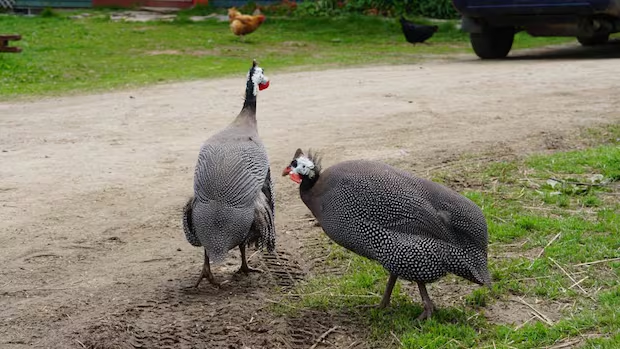
Guinea fowl, which are large, speckled birds related to chickens and turkeys, are known for their voracious appetite for insects and are increasingly being deployed as natural exterminators.
Heather Squires has been raising and supplying guinea fowl near Lunenburg, N.S., for more than 10 years. This year, she’s receiving “probably double” her usual number of inquiries for the birds. After selling about 70 keets — baby guinea fowl — she has had to halt sales to sustain a sufficient number for tick control on her own farm.
“We don’t see ticks. And this is Lunenburg County,” Squires said. “I don’t say insofar as we never see a tick, but it’s a rare event.”
The booming demand has also drawn new breeders like Phalen MacLean, who began hatching guinea fowl at her home in New Glasgow. She said she noticed a significant drop in the local tick population once her flock grew to 13.
Last year, Nova Scotia was found to have the most ticks in Canada. Veterinarians have also reported a rise in anaplasmosis, a tick-borne disease, over the past decade.
Effectiveness ‘debatable’
Bruce Rathgeber, a professor at Dalhousie University’s faculty of agriculture, said employing guinea fowl to control ticks is nothing new, but the tick surge gripping the region is “not a familiar thing to us.”
 Phalen MacLean said her guineas tend to lay eggs in concealed spaces. (Submitted by Phalen MacLean)
Whether the birds can effectively curb tick populations remains “debatable,” he said. However, based on his own experience raising fowl, he believes they can serve as a supplementary control method.
Rathgeber noted that published research points to landscape management — such as keeping grass short and clearing woods further from the home — as a more reliable way to control ticks.
“Certainly they’re an interesting bird to keep,” he said. “I would not rely on them entirely for tick control.”
Breeding challenges
Guinea fowl are known for being loud and hard to breed in captivity, and their intelligence is slightly questionable.
MacLean said the birds can find great nesting spots, yet sleep in trees even during snowstorms, exposing themselves to predators.
To counter this, Squires recommends locking them in a secure indoor space for three weeks so they learn to return home at night, similar to chickens.
She also believes guinea fowl have an advantage over chickens when it comes to landscaping, as they tend to pick bugs directly off leaves without destroying the vegetation.
Both breeders emphasized the birds require adequate space to range freely. Prospective owners should consider their yard size and proximity to neighbours before buying guinea fowl, they said.
Living near a busy road is also a hazard.
“They don’t have the road smarts,” Squires said. “They will get killed [by] traffic.”
MORE TOP STORIES