
Open this photo in gallery:
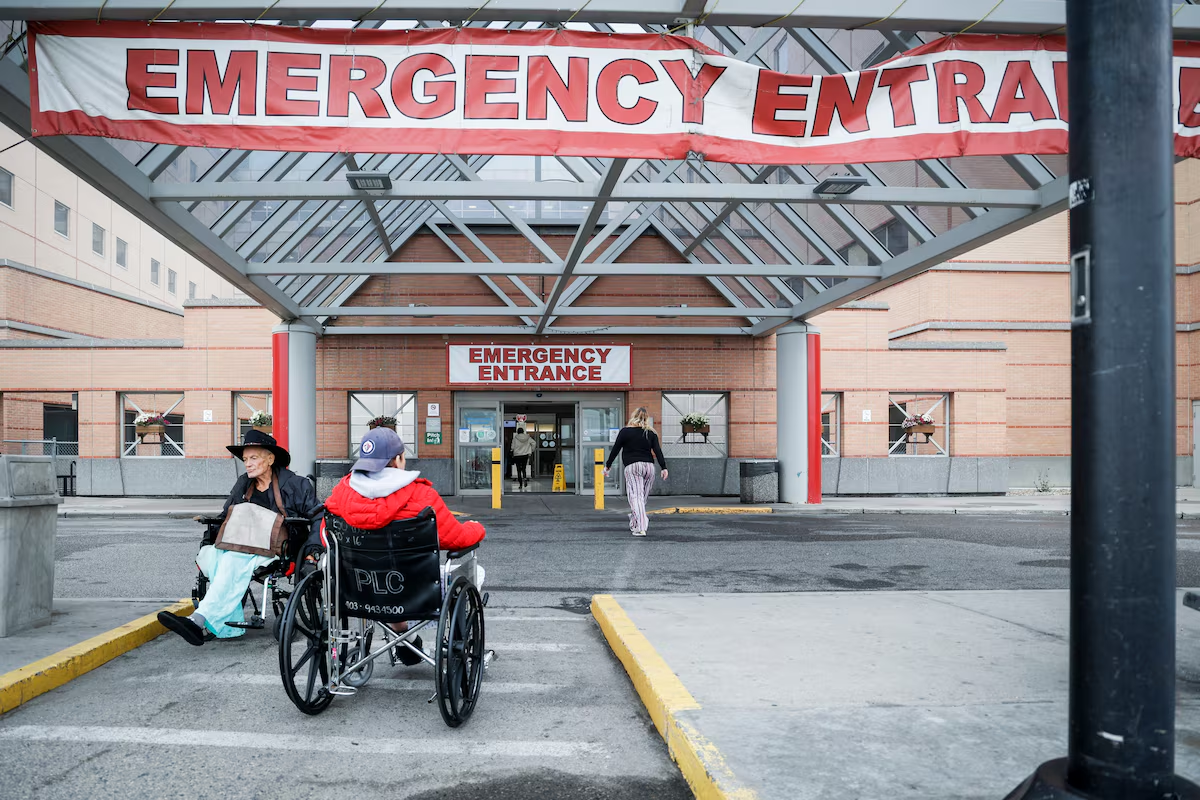
The entrance to the emergency department at Peter Lougheed hospital in Calgary.Jeff McIntosh/The Canadian Press
One in 10 patients spent more than 14 hours waiting for care in Canadian emergency departments, and those requiring admission to hospital sometimes waited more than three times longer, according to new research covering parts of 2024 and 2025.
The Canadian Institute for Health Information, in a report released Thursday, underscored that emergency department overcrowding is a result of pressures across the country’s health care system, both from inside and outside the hospital setting. This includes limited access to primary and long-term care, hospital bed shortages and an increasingly complex patient population.
The report concluded that 1.5 million patients in 2024-25, or 10 per cent, waited more than 14 hours in the ED, based on data from the National Ambulatory Care Reporting System (NACRS). This represents a 28-per-cent increase from 2018-19.
About 12 per cent of emergency department visits from April, 2024, to March, 2025, resulted in admission to hospital. Of those patients, one in 10 spent more than two days in the emergency department regardless of how serious their condition was – a 33-per-cent jump from 2018-19. CIHI said this was driven by higher admission rates among older, more medically complex patients.
Michael Herman, an Ottawa-based emergency physician, said the data back up the experiences of front-line doctors who have felt pressure build inside EDs for years.
“What it’s showing us is that we have a sicker population, more people are coming to us, they have less access to supports in the community and they’re staying in our emergency departments longer,” said Dr. Herman.
Preventable deaths, ‘near-misses’ caused by overcrowding in Alberta emergency rooms, documents show
Doctors across the country have long been sounding the alarm about overcrowding in emergency departments, an issue compounded by hospital underfunding and staffing shortages. In the summer months, the problem grows worse, with temporary emergency department closings in rural areas expected as health workers take much-needed time off.
Earlier this year, in Alberta, physicians and the provincial New Democratic Party called on the government to declare a formal emergency over ED overcrowding after the much-publicized death of Prashant Sreekumar. Mr. Sreekumar, 44, died after an apparent cardiac arrest after spending eight hours in an Edmonton emergency department.
The CIHI report shows 0.1 per cent of patients died and 7.7 per cent of patients left EDs before seeing a physician in 2024-25. Roughly 16.1 million ED visits were reported to NACRS that fiscal year, representing about 89 per cent of all visits across Canada.
Two-thirds of the ED visits were triaged as high-acuity, which indicates a life-threatening condition or the need for rapid medical evaluation. Children under 10, adults over 55 and Canadians living in low-income neighbourhoods visited most often.
The report also showed that large urban and teaching hospitals saw higher volumes of emergency department visits and complex patients.
Senior with influenza waited 90 hours in Edmonton emergency department, family says
One “horrifying” finding in the report – a term Dr. Herman said he doesn’t use lightly – is that older patients are waiting longer than younger ones to be placed in an inpatient bed. Older patients often have comorbidities or isolation requirements, and must wait for an appropriate bed or specialized unit, according to the report.
People over 75 have an increased risk of mortality if they spend even one night in an ED, said Dr. Herman before also pointing to a study out of the United Kingdom. Its findings, published in 2022, concluded that for every 82 patients kept waiting in the ED for six to eight hours for an inpatient bed, there is one additional death.
“This isn’t just an inconvenience, this is lethal,” said Dr. Herman.
He said there has been ample time for Canada to prepare for the impacts of an aging population but not enough has been done, especially to boost primary, long-term and community care supports.
“Unfortunately when those roads are blocked, the only road that people have is to come to the emergency department.”
The data show that patients admitted to inpatient care through an emergency department were discharged within a median of four days. However, eight per cent were designated alternative level of care (ALC) patients. These are people who no longer require hospital care but still occupy a bed until they can be transferred to a more appropriate setting.
ALC patients had a median stay of 24 days in hospital, which reduces bed availability for patients requiring admission from the ED.
Cheryl Chui, CIHI’s director of health system analytics, said the report underlines that improving emergency department wait times will require solutions that address the health system as a whole.
“If you just focus on ED wait times, then that tends to be where people sort of target the solution. But what we’re trying to illustrate with this report is that, actually, everything is interconnected.”