
Open this photo in gallery:
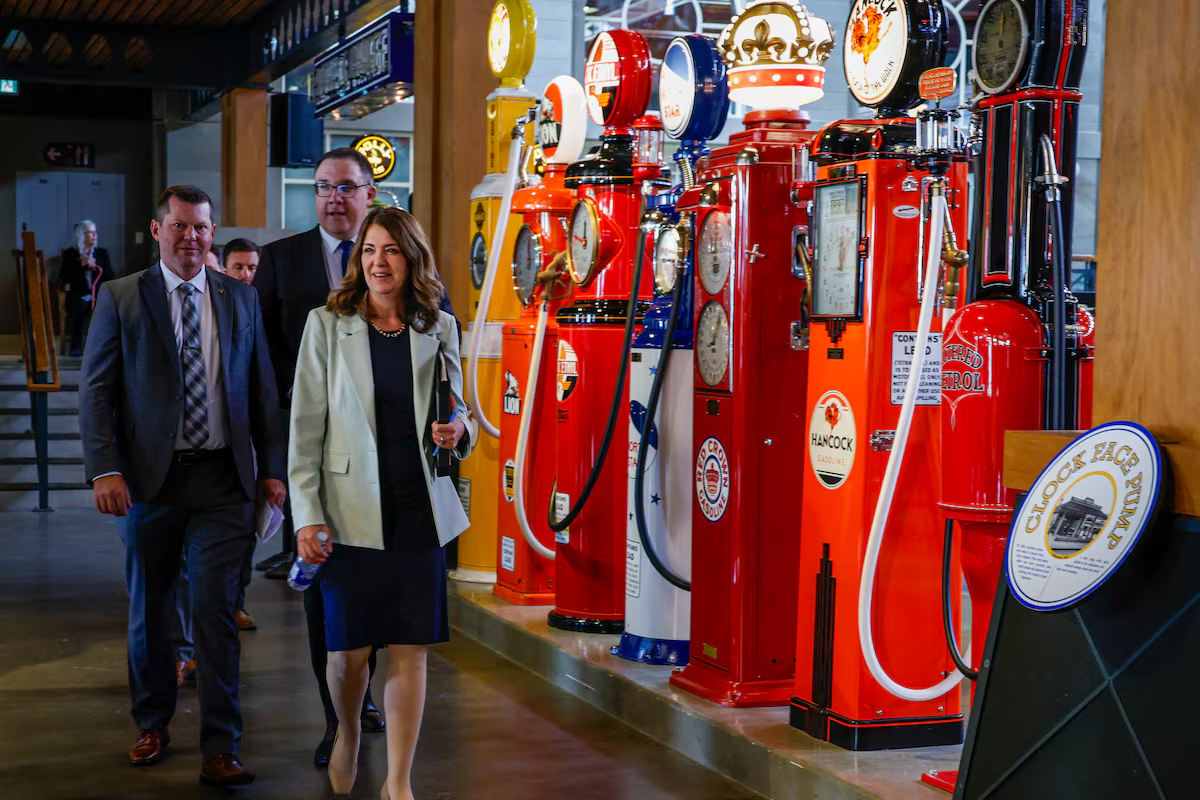
Alberta Premier Danielle Smith, right, walks past antique gas pumps in Calgary on Wednesday to announce a new affordability measure.Jeff McIntosh/The Canadian Press
Premier Danielle Smith’s government will cut $100 cheques to as many as 3.4 million Alberta residents this summer, casting it as a cost-of-living measure amid windfall oil revenues tied to the Iran war.
The payments were presented by Ms. Smith and her Finance Minister as an alternative to the province’s usual practice of slashing the provincial gas tax when oil prices rise, but critics called it a paltry offering in light of continuing affordability concerns.
Ms. Smith announced on Wednesday that Albertans with combined household incomes of less than $225,000 will be eligible for the direct payments. Ms. Smith’s government is calling the payments the Alberta Energy Rebate.
The Alberta government’s coffers, uniquely sensitive to swings in oil prices, have swelled since conflict in Iran started in late February, as the province’s royalties from producers have risen. The war has also caused retail gas prices to balloon. Ms. Smith said the rebate will help Albertans who have been forced to tighten their belts because of rising costs, primarily at the pump.
“People have suffered through higher prices over the last three months. There is additional revenues that come in,” Ms. Smith said at a news conference in Calgary.
“My bias is always: let’s give out the money when we have it, not give out money in the future before we’ve earned it.”
Beyond affordability concerns, the Premier faces pressure on many other fronts.
Opinion: Danielle Smith is playing a dangerous game with her referendum question on secession
In May, Ms. Smith, after a months-long petition drive by separatists to hold an independence referendum, said she would put a question about secession on Alberta’s Oct. 19 referendum ballot, which will also include questions on immigration.
On Wednesday, The Globe and Mail reported that Alberta Health Services, the province’s public-health agency, has been ordered to turn over documents to law enforcement. It marked the first public confirmation that police investigators are directly probing AHS, which has been at the centre of a controversy that has rocked Ms. Smith’s government.
Meanwhile, Ms. Smith’s United Conservative Party and the Opposition Alberta NDP are beginning to gear up for the province’s October, 2027, general election.
Open this photo in gallery:
NDP Leader Naheed Nenshi says the UCP was right to share the oil windfall with residents, but called it a ‘one-time stunt’ that doesn’t address ‘the real issues’ around affordability.Todd Korol/Reuters
Alberta NDP Leader Naheed Nenshi on Wednesday offered the first look at his party’s economic plan for the province.
Mr. Nenshi said Ms. Smith’s United Conservative Party was right to share the oil windfall with residents, but he called it a “one-time stunt” that doesn’t address “the real issues” around affordability.
Wednesday’s announcement showed how rapidly Alberta’s financial situation has changed since the beginning of the year, when the province was warning of “tough choices” ahead.
In February, Ms. Smith’s government unveiled a budget that projected a $9.4-billion deficit amid languishing oil prices.
Days after the budget was unveiled, however, U.S. and Israeli military attacks on Iran halted commercial traffic in the Strait of Hormuz, a vital route for energy shipments on the global market.
In the months since, the price of West Texas Intermediate crude has hovered close to US$100 a barrel, only recently dropping closer to US$80 after news that the U.S. and Iran had reached a framework agreement to extend their ceasefire.
Every $1 change in the per-barrel price of oil has an approximate $700-million effect on the province’s bottom line.
Opinion: Danielle Smith is a stranger in her own country
The high oil prices are expected to bring Alberta closer to breaking even for its most recent 2025-26 fiscal year, which ended March 30. Before the conflict in Iran, the government had projected a $4.1-billion deficit for that fiscal year.
Alberta’s annual report for that fiscal year will be published near the end of this month.
The decision to cut $100 cheques was one of two options available to the United Conservative Party government, Ms. Smith said Wednesday.
Alberta has a program that adds a tax to the per-litre cost of gas depending on the average oil price over a particular period. For example, when oil prices average below US$80 over 20 trading days leading up to a specific date on the calendar, the Alberta government adds 13 cents a litre to the cost of gas.
The province chose to deliver the $100 rebates instead of lowering the gas tax, Ms. Smith said, arguing families will take home more money under this structure: “We made a decision that people need the money now based on the fact that the prices have been so high in the past.”
Ms. Smith said her government didn’t have the option to squirrel away the money because provincial laws forced her to choose between the rebate or cutting the gas tax.
She did not commit to future payments, pointing to oil prices that had dropped in response to the deal between the U.S. and Iran. Oil prices on Wednesday fluttered around US$75 per barrel, around the average price needed to balance Alberta’s budget.